A move changes more than an address. This spread compares your reason for moving, the practical conditions and a way to test the choice. It cannot predict whether a new place will make you happy or replace research into the home and location.
For reflection and entertainment. Tarot and AI readings don't predict the future and aren't financial, medical, legal or psychological advice. Use them as a prompt to think, not as a decision.
Should I move? Draw your three cards
Free, no signup. Three distinct cards are drawn at random from the full 78-card deck. Each has a one-in-three chance of appearing reversed.
This random draw does not establish an outcome, reveal another person’s private thoughts or give a date. Use it as a prompt; check facts separately.
The three positions for this question
Set these positions before drawing. Read each card through its position instead of applying the same meaning to all three.
1. What you want the move to change
Use this card to separate a concrete need from a general urge to escape. What would improve specifically, and what difficulty might move with you?
2. Practical conditions to verify
Read the symbol as a prompt to check the actual conditions: housing, ongoing costs, transport, work and the people you rely on.
3. How to test the new life
Use the card to choose a test before committing: a visit, a commute trial or a conversation with someone who lives there.
Keep this question in focus
Distinguish what the move can change from what you hope it will solve. A shorter commute is testable; a feeling that life will finally begin is harder to evaluate. Compare ordinary daily life in each place, including cost, transport and support.
A complete example for “Should I move?”
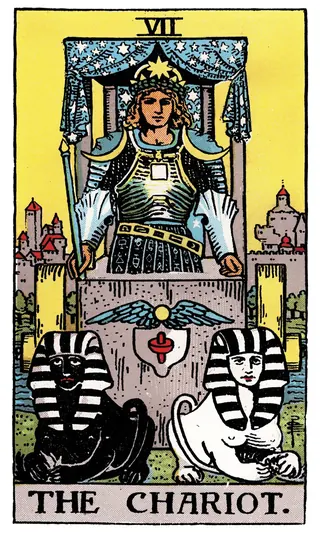
What you want the move to change
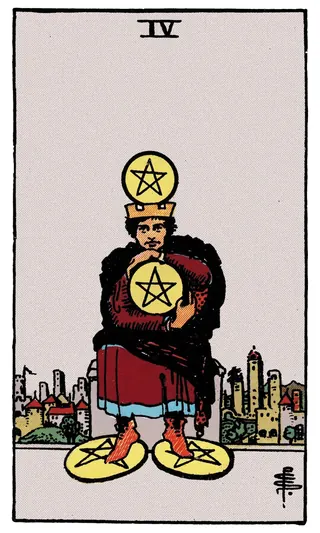
Practical conditions to verify
How to test the new life
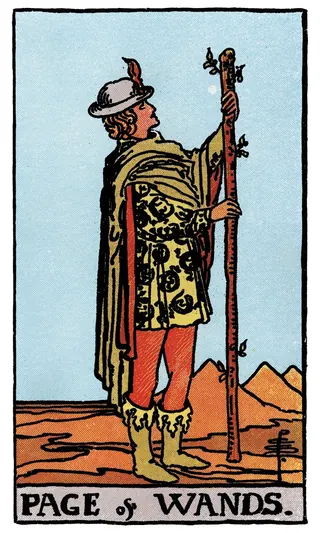
Pamela Colman Smith · Rider–Waite–Smith (1909)
These three upright cards are selected as an instructional example, not presented as a random draw or a recorded personal reading. Your own cards may differ; the method is to connect the symbol, position and context.
1. What you want the move to change — The Chariot
The Chariot evokes direction. It invites you to name the purpose of moving rather than interpret movement itself as a command to relocate.
2. Practical conditions to verify — Four of Pentacles
The Four of Pentacles highlights resources and security. Put the recurring costs beside your current situation instead of judging the choice from the first month's excitement.
3. How to test the new life — Page of Wands
The Page of Wands suggests exploration. A realistic visit that includes ordinary errands can teach you more than a holiday-style impression.
Put the example together
Connect what you want the move to change with practical conditions to verify, then use how to test the new life to identify something you can examine or do. Look for a shared theme and a tension between the cards. If a connection does not fit what you know, do not force it.
Try an alternative interpretation as well. A card about holding on could describe useful stability or fear of change; decide which fits the evidence rather than selecting the version you prefer.
How to read a reversal here
A reversed card uses the reversed keywords shown in your result. Read those themes through the same position. It does not automatically negate the upright card or turn the whole spread into a no. A theme of hesitation, for example, can prompt a question about your own uncertainty without identifying another person’s motive.
Learn more about reversed tarot cards. Use the full card meaning as context, not as a substitute for the facts of your situation.
Cards often read as a green light for moving
These cards are traditionally associated with relocation, travel or a healthy fresh start. Read them as support for exploring the move seriously, not as proof that the new city will work out.
| Card | Why it suits a move question |
|---|---|
| Six of Swords | Leaving rough water for calmer shores; often called the classic relocation card. |
| Three of Wands | Looking out toward distant horizons, plans that extend beyond your current place. |
| Eight of Wands | Momentum and travel; paperwork and logistics may move quickly once you decide. |
| The Fool | A leap into unfamiliar territory with curiosity rather than dread. |
| Ace of Pentacles | A tangible opportunity such as a lease, a job offer or a better housing deal. |
| Knight of Pentacles | Slow, methodical progress; the move works if you plan it step by step. |
| The World | Completion of one chapter and readiness for a wider life, sometimes literally abroad. |
| Ten of Pentacles | Long-term roots, family support and a place you could build in. |
| Four of Wands | A home that feels like a celebration; settling in and belonging. |
| Eight of Cups | Walking away from something that no longer nourishes you, when staying has become empty. |
Cards that suggest waiting, staying or rethinking the plan
A cautious card is not a ban on moving. It usually highlights a cost, a fear or an unfinished task that deserves attention before you sign anything.
- Nine of Swords: fear or anxiety may be driving the urge to escape; check whether the problem would follow you.
- Five of Pentacles: money stress; compare deposits, moving fees and income before committing.
- Two of Swords: the indecision is real; you may need one missing fact rather than a bigger sign.
- Four of Swords: rest before upheaval; an exhausted person rarely makes a good relocation choice.
- Six of Cups: nostalgia for your hometown may be stronger than you admit.
- Seven of Cups: too many dream destinations and no clear criteria for choosing one.
- Ten of Wands: carrying too many obligations; a move could add weight instead of removing it.
- The Hanged Man: a pause or a different perspective; waiting a season may reveal more.
- Justice: a lease, contract or legal detail that needs careful review.
When the cards say go and stay at the same time
Mixed draws are especially common for relocation, because most moves involve gains and losses at once. Imagine you pull The Star for what you want to change, Seven of Pentacles for practical conditions and Three of Cups for how to test the new life.
The Star suggests a sincere hope for renewal. The Seven of Pentacles in the practical slot is slower: it asks you to measure the return on your effort, perhaps by checking whether your savings and earning potential justify the change now or in a year. The Three of Cups as a test points to community; before moving, find out whether you would have friends, clubs or colleagues there.
So the message is "yes to the hope, not yet to the timing, and build your social map first." That is far more useful than reading the spread as a confusing maybe. If one card still feels unclear, look up its upright and reversed meaning rather than drawing again.
When should I move? How readers treat timing
Tarot timing is symbolic. A common convention links Wands to quick change, Cups and Swords to a few weeks or months, and Pentacles to slow, material processes that can take a year. Some readers also use seasons tied to each suit. These are traditions, not measurements, and two readers may assign the same card different timeframes.
Real moving decisions run on calendars you can actually check: lease end dates, school terms, notice periods at work and the moving season in your area. It can also help to know why other people relocate. In a U.S. Census Bureau analysis of Current Population Survey data, housing reasons (41.6%) were the most common general category for moving in 2022, followed by family reasons (26.5%), while job-related moves were among the least common.
If your cards feel urgent but the practical dates are months away, trust the dates and use the cards to prepare.
Practical next steps after your moving reading
- Write a two-column budget: current monthly costs versus estimated costs in the new place, including transport and utilities.
- Spend a weekday in the area doing ordinary things such as groceries, commuting at rush hour and visiting a laundromat.
- List who you would call in an emergency there; if the answer is no one, plan how to build support before or soon after arriving.
- Read any lease or purchase contract slowly, and ask a qualified professional about anything you do not understand.
- Set a decision date so the question does not stay open forever.
Stop drawing cards once you have one clear reflection; repeated spreads tend to amplify anxiety about change. If the urge to move is tied to a crisis, such as an unsafe home, a breakup or deep low mood, talk with someone you trust or a counselor before making a big decision. You might also find the stay-or-leave spread or the career change reading helpful.
Real-world signals that matter more than the cards
A relocation reading works best as a mirror for motives. The stronger evidence usually sits in your own behavior and in the numbers:
- You have been researching the same city or neighborhood for months, and the interest survives a rainy visit.
- You can name the specific problem the move fixes, such as rent, commute, schools or distance from family.
- The new rent or mortgage would still leave room for savings and emergencies.
- A partner, children or anyone moving with you has been part of the decision, not just informed of it.
- You have a work plan that does not depend on luck: a remote role confirmed in writing, an offer, or a realistic search timeline.
If most of these are true, a cautious card is probably pointing at nerves. If few are true, even The Chariot may simply reflect the wish to escape rather than readiness to go.
Practical checks after this reading
- Compare total recurring costs and practical obligations.
- Test travel and daily routines in the new location.
- Identify support you would lose, keep or need to rebuild.
Record the cards, one possible interpretation and one fact that would help you evaluate it. If the draw does not fit, leave it aside. Repeating a draw until it feels reassuring does not make the result more informative.
Choose the question you actually mean
These related spreads examine different questions; one answer should not be used to settle the others.
More tarot readings by question
Love and attraction
- Does he like me?
- Does she like me?
- How does he feel about me?
- Is he thinking about me?
- Does he miss me?
- Will he text me?
- Should I text him?
- Is he the one?
- Will he commit?
- Will I find love?
- When will I meet my soulmate?
- Future husband tarot
- Will I get married?
Exes and second chances
- Will he come back?
- Will she come back?
- Does my ex still love me?
- Will my ex contact me?
- Will we get back together?
- Should I forgive him?
- Should I stay or leave?
Work, money and study
- Will I get the job?
- Will I get promoted?
- Should I quit my job?
- Should I change careers?
- Will my business succeed?
- Will my finances improve?
- Will I pass my exam?
Life decisions
Frequently asked questions
Can this reading answer “Should I move?” with certainty?
A move changes more than an address. This spread compares your reason for moving, the practical conditions and a way to test the choice. It cannot predict whether a new place will make you happy or replace research into the home and location.
How is this spread different from the other readings?
This spread uses what you want the move to change, practical conditions to verify and how to test the new life. Its worked example and practical checks focus on this question. It does not use a generic yes/no score.
Does typing my question change the interpretation?
No. The optional note is for your own context. Cards are drawn at random in your browser, and the prompts are written for the positions on this page. No AI analyses your note in this tool.
What should I do with an unclear or uncomfortable reading?
Record one possible interpretation and compare it with what you know. If it does not fit, you can leave it aside. Another draw cannot establish a missing fact; use a conversation, records or other relevant information instead.
Method and further reading
This tool uses the site’s Rider–Waite–Smith card keywords with question-specific reflection prompts. It does not analyse your optional note with AI, infer hidden information or calculate the likelihood of an outcome. The worked example explains how to apply the positions.
Learn to read a complete tarot spread · All 78 card meanings · How our tools work
Sources cited on this page:
- Change in Marital Status Became More Common Reason for Moving from 2021 to 2022 · U.S. Census Bureau