For as long as people have feared bad luck, envy or harm, they have carried symbols to feel protected. Some are worn as jewellery, some hang above doors and some are drawn or carved. Below are the protection symbols you are most likely to come across, where they come from and what they are traditionally believed to do.
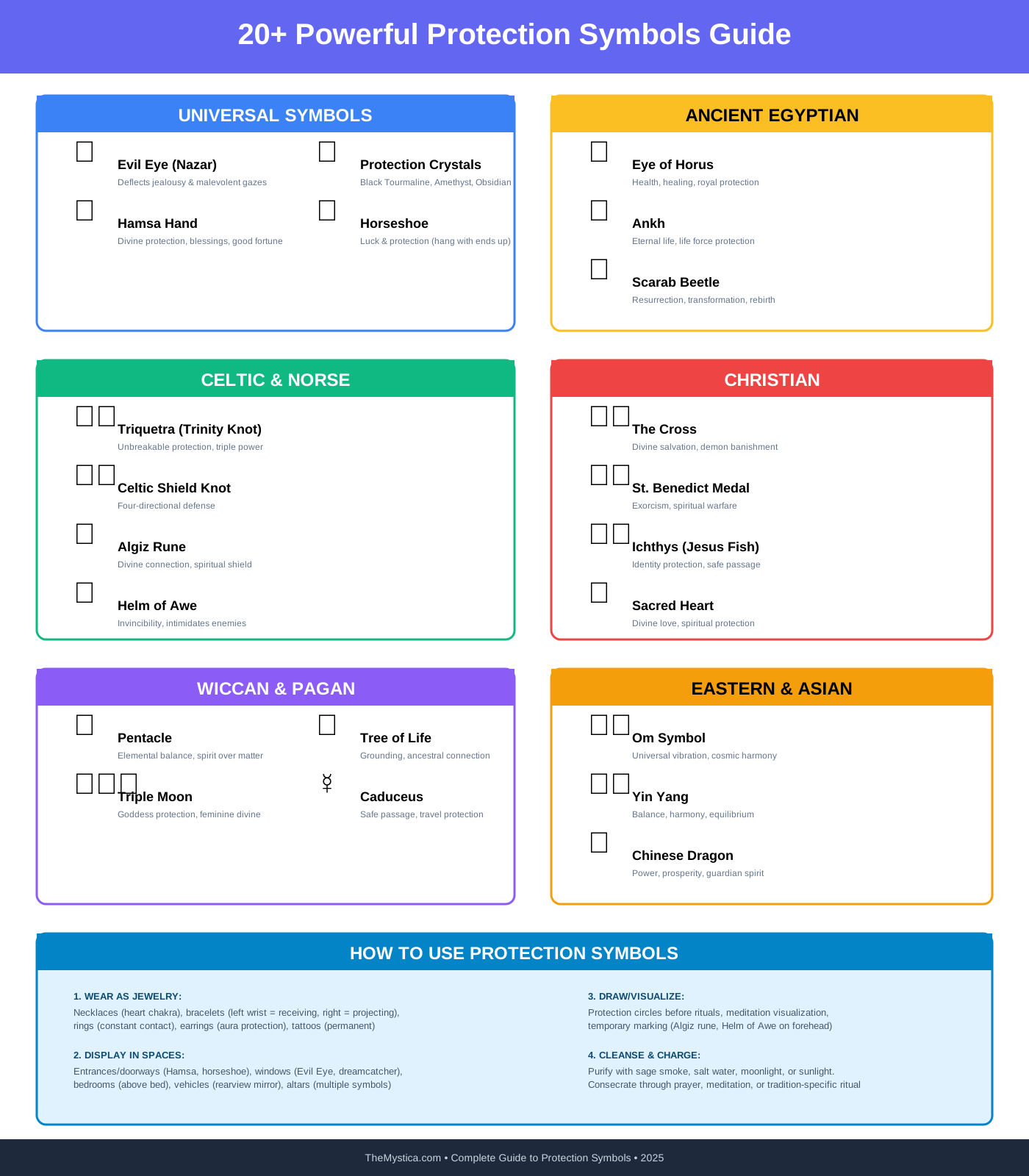
Symbols used across many cultures
Evil eye (nazar)
The blue glass eye known as a nazar is common in Turkey, Greece and across the Mediterranean and Middle East. The belief behind it is that envious looks can cause harm, and the charm "looks back" to deflect them. It is often hung in homes and cars or given to newborn babies.
Hamsa
The Hamsa is an open right hand, often with an eye in the palm. It is used in both Jewish and Muslim communities in North Africa and the Middle East, where it is also called the Hand of Miriam or the Hand of Fatima. It is associated with blessings, good fortune and protection from the evil eye.
Horseshoe
In European and American folk tradition, an iron horseshoe hung above a door protects the home and brings luck. Many people hang it with the ends pointing up so that the luck does not run out, although some traditions prefer the ends pointing down.
Ancient Egyptian protection symbols
Eye of Horus (wedjat)
The Eye of Horus comes from the myth in which the god Horus lost his eye in a fight and it was restored. The wedjat eye became a symbol of healing, wholeness and protection and was one of the most popular amulets in ancient Egypt, often placed with the dead.
Ankh
The ankh, a cross with a loop at the top, is the Egyptian hieroglyph for life. Gods are often shown holding it, and it was used as an amulet for protection and long life.
Scarab
The scarab beetle was linked with the sun god Khepri and the daily rebirth of the sun. Scarab amulets were symbols of renewal and protection, both for the living and in burials.
Celtic and Norse protection symbols
Triquetra
The triquetra is a three-cornered interlaced knot found in early medieval Celtic and Norse art. Christians later used it to represent the Holy Trinity, and many people today wear it as a symbol of lasting protection and unbreakable bonds.
Celtic shield knot
Shield knots are square-shaped knotwork designs with four corners. They are popular as symbols of protection, with the four sides often read as guarding the four directions.
Algiz rune
Algiz, the rune shaped like an upright fork, is associated in modern rune traditions with protection and connection to the divine. Its original meaning is uncertain, so these interpretations come mainly from modern practice.
Helm of Awe (Ægishjálmur)
The Helm of Awe is a magical stave of eight tridents radiating from a centre. It is recorded in Icelandic magical manuscripts from the early modern period, where it was meant to protect its bearer and strike fear into enemies. It is often called a Viking symbol, but there is no evidence that it was used in the Viking Age.
Thor's hammer (Mjölnir)
Small hammer-shaped pendants have been found in many Viking Age graves and hoards. They are widely interpreted as protective amulets connected with the god Thor, who defended gods and humans against chaos.
Christian protection symbols
The cross
For Christians the cross is the central symbol of faith, and it has long been worn, carried or placed in homes as a sign of God's protection.
Saint Benedict medal
The Saint Benedict medal carries a cross and a series of Latin initials from a prayer of exorcism. Catholics wear it or place it in homes and buildings as a sacramental for protection against evil.
Modern spiritual practice
Pentacle
A point-up five-pointed star inside a circle is a central symbol in Wicca and other modern pagan traditions. It represents the elements and spirit and is used for protection. It is not the same as the point-down pentagram used in Satanic imagery; see our guide to satanic symbols for the difference.
Protection crystals
Crystals such as black tourmaline, obsidian and amethyst are popular in modern energy practice as protective stones. There is no scientific evidence that crystals block harm, but many people use them as a calming reminder to set boundaries.
How to use protection symbols in daily life
- Choose one that means something to you. A symbol from your own family or culture usually feels more meaningful than one picked at random.
- Keep it visible. Wear it, place it by your front door or keep it where you work, so it acts as a regular reminder.
- Pair it with an intention. Many people say a short phrase when they put on a protective piece, such as "only what is good for me gets through."
- Respect its origins. Symbols like the Hamsa or the Saint Benedict medal are sacred to living religious communities.
A word of caution
No symbol can protect you from a real threat, and nobody should frighten you into buying an amulet or paying to remove a curse. If you feel unsafe, contact local emergency services or someone you trust.
For practical techniques such as grounding, shielding and setting energetic boundaries, read our full guide to psychic protection.
Frequently asked questions
What is the most powerful protection symbol?
There is no single most powerful symbol. The evil eye, Hamsa, Eye of Horus, cross and pentacle are among the most widely used, and most traditions agree that the symbol that means most to you personally is the one to choose.
Where should I put a protection symbol at home?
Traditionally, protection symbols are placed near the front door or above it, since the entrance is where people and energy come in. Evil eye charms are also hung in cars and near babies' cribs.
Is the evil eye a religious symbol?
The evil eye charm is a cultural and folk symbol rather than a religious one. It is used by people of many faiths across the Mediterranean, the Middle East and South Asia.
Is the Helm of Awe a Viking symbol?
It is often described that way, but the Helm of Awe is recorded in Icelandic magical manuscripts from centuries after the Viking Age. There is no archaeological evidence that Vikings used it.
What is the difference between a pentacle and a pentagram?
A pentagram is the five-pointed star itself. A pentacle usually means a point-up pentagram inside a circle, which is a protective symbol in Wicca. A point-down pentagram is associated with Satanic imagery.