⚡ Empath: What We're Actually Talking About
- The spiritual view: Empaths are psychically attuned individuals who literally absorb the emotions and energy of others.
- The psychological view: "Highly Sensitive Persons" (HSPs) have a documented nervous system trait affecting ~20% of people.
- The overlap: Both describe people who feel deeply affected by others' emotions and environments.
- Our approach: Whether you frame it spiritually or scientifically, the experiences are real. We'll cover both perspectives.
Empathy, sensitivity and healthy boundaries
Feeling other people's emotions strongly does not require a paranormal explanation. If conversations leave you exhausted, try identifying the feeling you noticed, asking whether it is yours to solve, and setting a time limit on difficult discussions. Keep a brief record of what helps.
Our empath self-reflection quiz can help you explore common patterns. For situations where a strong feeling is mistaken for certainty, see intuition versus anxiety. Neither page provides a clinical assessment.
What Is an Empath?
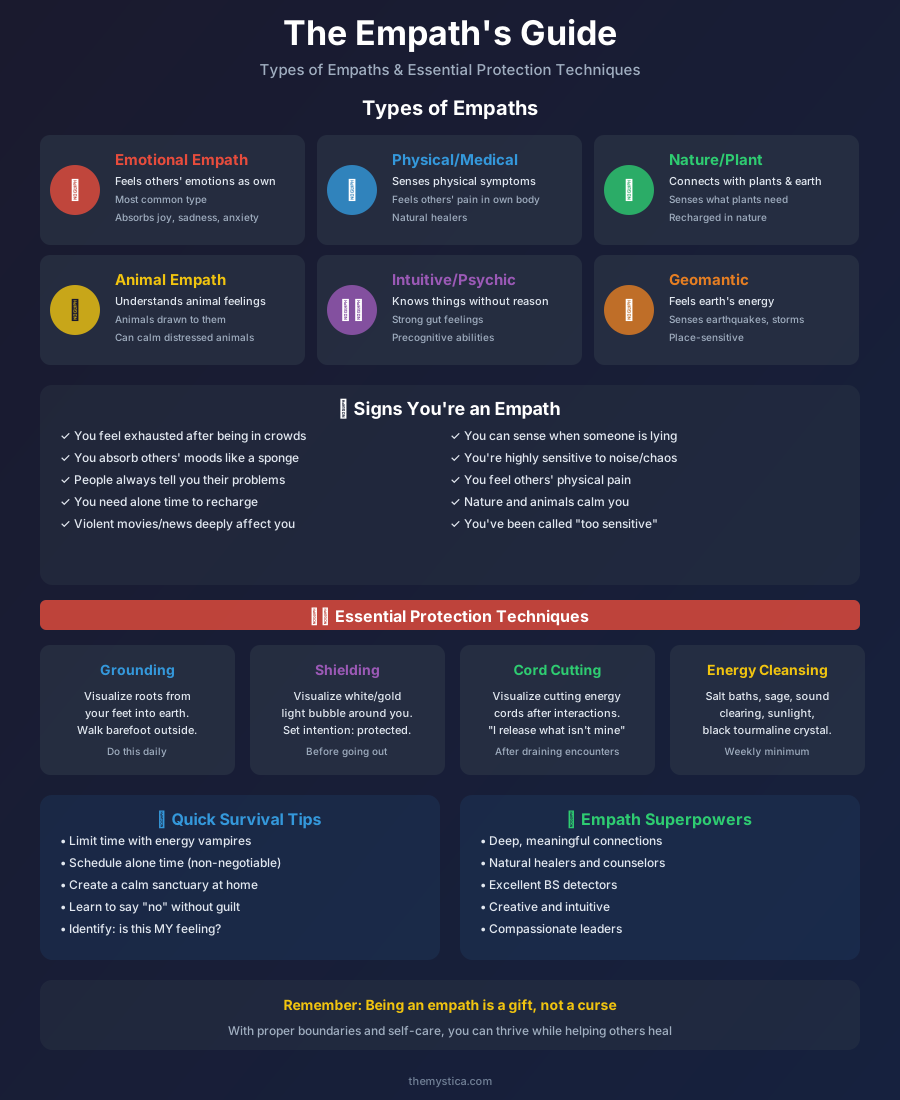
An empath is someone who experiences a heightened sensitivity to the emotions, energy, and states of others—often to the point where they feel these emotions as if they were their own.
The term became popular through the spiritual community but overlaps significantly with the scientifically studied trait called Sensory Processing Sensitivity (what Elaine Aron calls being a "Highly Sensitive Person" or HSP).
Empath vs. Empathy vs. HSP
| Term | Definition | Validated? |
|---|---|---|
| Empathy | The ability to understand others' feelings. Everyone has this to varying degrees. | Yes, neurologically documented |
| Empath | Someone whose empathy is so heightened they "absorb" others' emotions. | Spiritual concept, not scientifically defined |
| HSP | People with Sensory Processing Sensitivity—heightened response to stimuli. | Yes, peer-reviewed research since 1990s |
| Psychic Empath | An empath who also has other psychic abilities (clairvoyance, etc.) | Spiritual concept |
🔮 Signs You Might Be an Empath
Check how many apply to you:
- ☐ You walk into a room and immediately sense the "mood"
- ☐ After being around certain people, you feel drained or different than before
- ☐ Others' pain affects you physically—you might feel their headache
- ☐ Crowds, malls, and busy places overwhelm you
- ☐ You know when someone is lying or hiding their true feelings
- ☐ Watching violence or suffering (even fictional) affects you deeply
- ☐ People often tell you their problems, even strangers
- ☐ You need significant alone time to "reset"
- ☐ You've been called "too sensitive" your whole life
- ☐ You absorb both positive and negative emotions from others
5+ signs? You likely have significant empathic traits. Whether this is "empath" or HSP depends on your preferred framework.
Types of Empaths
Different sources categorize empaths differently. Here are commonly described types:
😢 Emotional Empath
The most common type. Picks up and absorbs others' emotional states—their joy, sadness, anxiety, anger.
🤒 Physical/Medical Empath
Senses physical symptoms or ailments in others. May feel pain or illness that belongs to someone nearby.
🌿 Nature/Animal Empath
Deeply connected to animals, plants, or nature. Feels distress when natural environments are harmed.
🌍 Geomantic Empath
Senses energy of places and locations. Some buildings feel wrong; some landscapes feel alive.
👻 Intuitive/Psychic Empath
Receives information beyond emotion—may sense thoughts, future events, or spiritual presences.
🪨 Heyoka Empath
The "sacred clown" in Native American tradition. Mirrors others' energy back to them, often through disruption.
The Science: HSP Research
While "empath" isn't a scientific term, Sensory Processing Sensitivity is. Key findings:
- It's genetic: HSP trait is hereditary, found in over 100 species, suggesting evolutionary advantage
- Brain differences: HSPs show heightened activity in brain areas related to awareness, empathy, and self-other processing
- Mirror neurons: HSPs may have more active mirror neuron systems—the neurons that fire when observing others' experiences
- Depth of processing: HSPs process information more deeply before acting—both advantage and challenge
- 15-20% of population: Being an HSP is not rare, but often misunderstood
Whether you call it being an empath or being an HSP, the underlying phenomenon is real and measurable.
⚠️ When "Being an Empath" Might Be Something Else
Important considerations:
- Anxiety: Hypervigilance to others' moods can be a trauma response, not a gift. Consider therapy if it's distressing.
- Codependency: Focusing on others' emotions to avoid your own. "I feel your pain" can be avoidance of "I feel my pain."
- Lack of boundaries: Taking on others' problems because you haven't learned to say no. This isn't empathy—it's people-pleasing.
- Identity protection: "I'm an empath" can become a way to avoid examining difficult emotions. "That's not my feeling" might sometimes mean "I don't want to own this feeling."
Being genuinely empathic is real. But the label can sometimes mask issues that deserve direct attention.
The Gift and the Burden
Empath Strengths
- Deep connections: Others feel truly seen and understood around you
- Natural healer: Your presence is soothing; you know what people need
- Human lie detector: You sense incongruence between words and feelings
- Creative insight: Rich inner world feeds artistic and creative work
- Intuitive guidance: You pick up information others miss
Empath Challenges
- Overwhelm: Too much input from too many sources
- Energy depletion: Taking on others' emotions drains your own reserves
- Difficulty with boundaries: Where do you end and others begin?
- Absorbing negativity: One angry person can ruin your whole day
- Isolation: Sometimes it's easier to just stay away from people
Energy Vampires and Toxic People
Empaths are particularly vulnerable to what's called "energy vampires"—people who leave you drained after interaction:
- The Victim: Everything is always wrong; they need constant emotional support
- The Narcissist: Your empathy feeds their need for attention and validation
- The Drama Queen/King: Every situation becomes a crisis requiring your involvement
- The Controller: Uses your desire to please against you
Note: "Energy vampire" is a metaphor. These are people with their own issues who affect empaths disproportionately—not supernatural beings.
🛡️ Protection Techniques for Empaths
Whether spiritual or psychological, these practices help empaths maintain boundaries:
- Grounding: Feel your feet on the floor. Visualize roots. Return to your own body when you drift into others' energy.
- Shielding: Visualize a protective boundary—light, bubble, mirror—that lets love in but deflects negativity.
- Cord cutting: Visualize releasing energetic connections to people who drain you.
- Physical boundaries: It's okay to leave situations, limit time with certain people, say no.
- Claiming space: "This is my energy. That is their energy." Verbal affirmation can be powerful.
- Regular clearing: Salt baths, nature time, meditation—whatever helps you reset to baseline.
- Professional support: Therapists who understand HSP/empath traits can help develop healthy coping.
Thriving as an Empath
The goal isn't to stop being empathic—it's to be empathic without suffering for it:
- Know yourself: Understand what drains you vs. what nourishes you
- Create non-negotiable recovery time: Empaths need alone time—not optional
- Choose environments: Where you work, live, and socialize matters enormously
- Practice discernment: Not every feeling you feel belongs to you
- Use your gift consciously: Channel empathy into healing work, creative work, meaningful connection
- Find your people: Other empaths understand. Community helps.
Empath vs. Psychic: The Relationship
Being an empath is related to but different from being psychic:
- Empaths primarily sense emotions and energy states
- Psychics may receive information (future events, distant locations, spirit communication)
- Overlap: Many empaths develop psychic abilities, and most psychics are empathic
- Clairsentience is the "clair" most associated with empathic ability
If you're empathic and interested in developing broader intuitive abilities, your sensitivity is a foundation to build on.
The Honest Assessment
"Empath" has become a popular identity, and not everyone who claims it truly has heightened sensitivity. Some use it to justify poor boundaries or avoid personal growth.
But genuine empathic sensitivity—whether you call it empath, HSP, or just "deeply feeling"—is real, has scientific backing, and comes with both gifts and challenges.
The question isn't "Am I an empath?" The question is: "How do I work with my sensitivity so it enriches rather than depletes my life?" If you're still wondering, take our Am I an Empath quiz for a quick, guided answer.
That's a question worth exploring—regardless of which label you use.
Related Guides
Am I an Empath Quiz Clairsentience ESP Overview Develop Abilities Psychic vs IntuitiveSources and further reading
- Empathy · Wikipedia
Reviewed by The Mystica Editorial Team under our editorial standards. Last reviewed: September 28, 2026.